Lesson Sequencing
Lesson Sequencing in Curriculum
See how the CSEL Team applied this Research-based Practice into the World Generation Curriculum:
The examples below are from a single WorldGen unit focusing on ancient Egypt and the Egyptian pharaohs. Note how the sequence of lessons is guided by the central comprehension question and systematically builds vocabulary and content knowledge through oral and written activities.
Student Pages
Springboard to Start
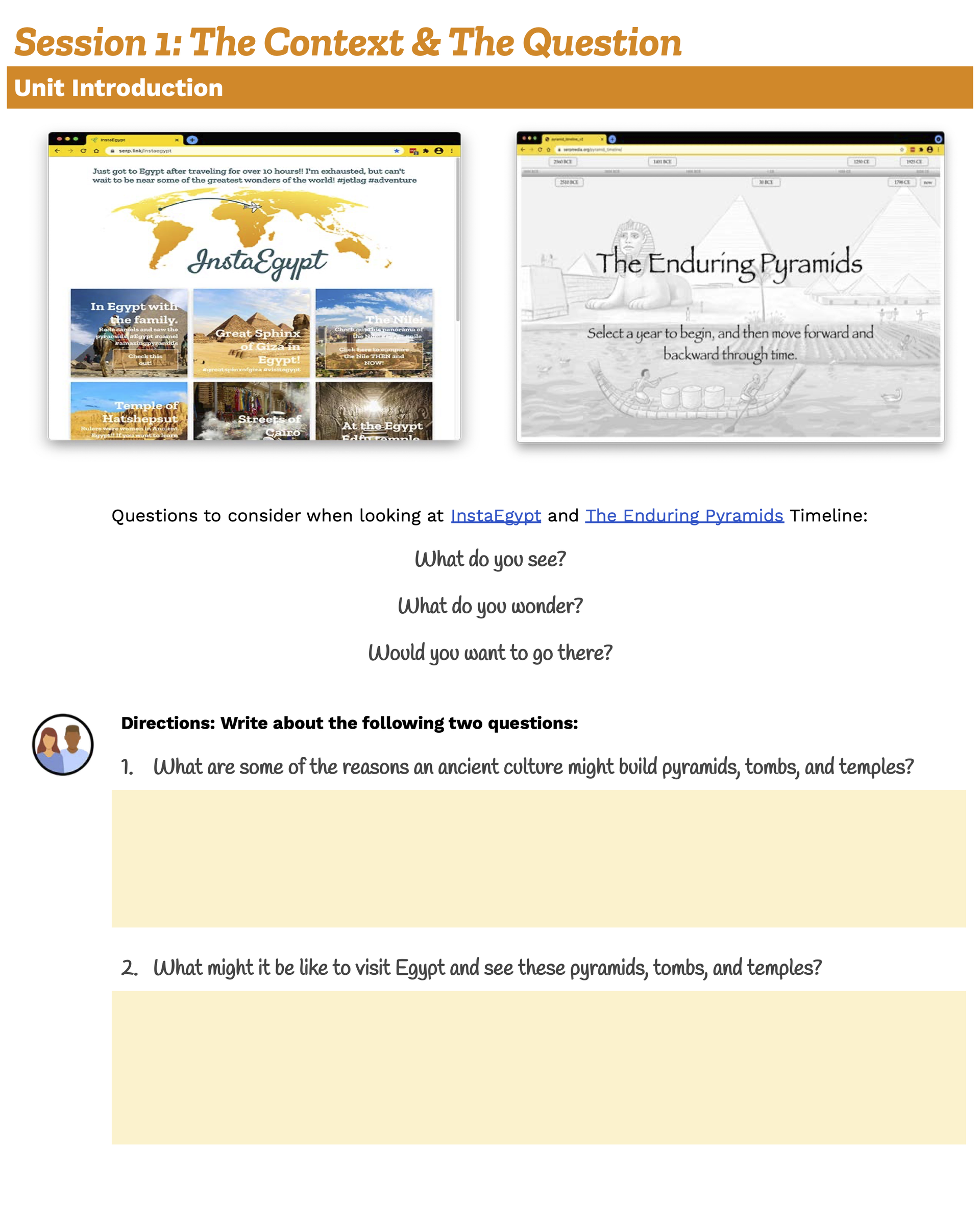
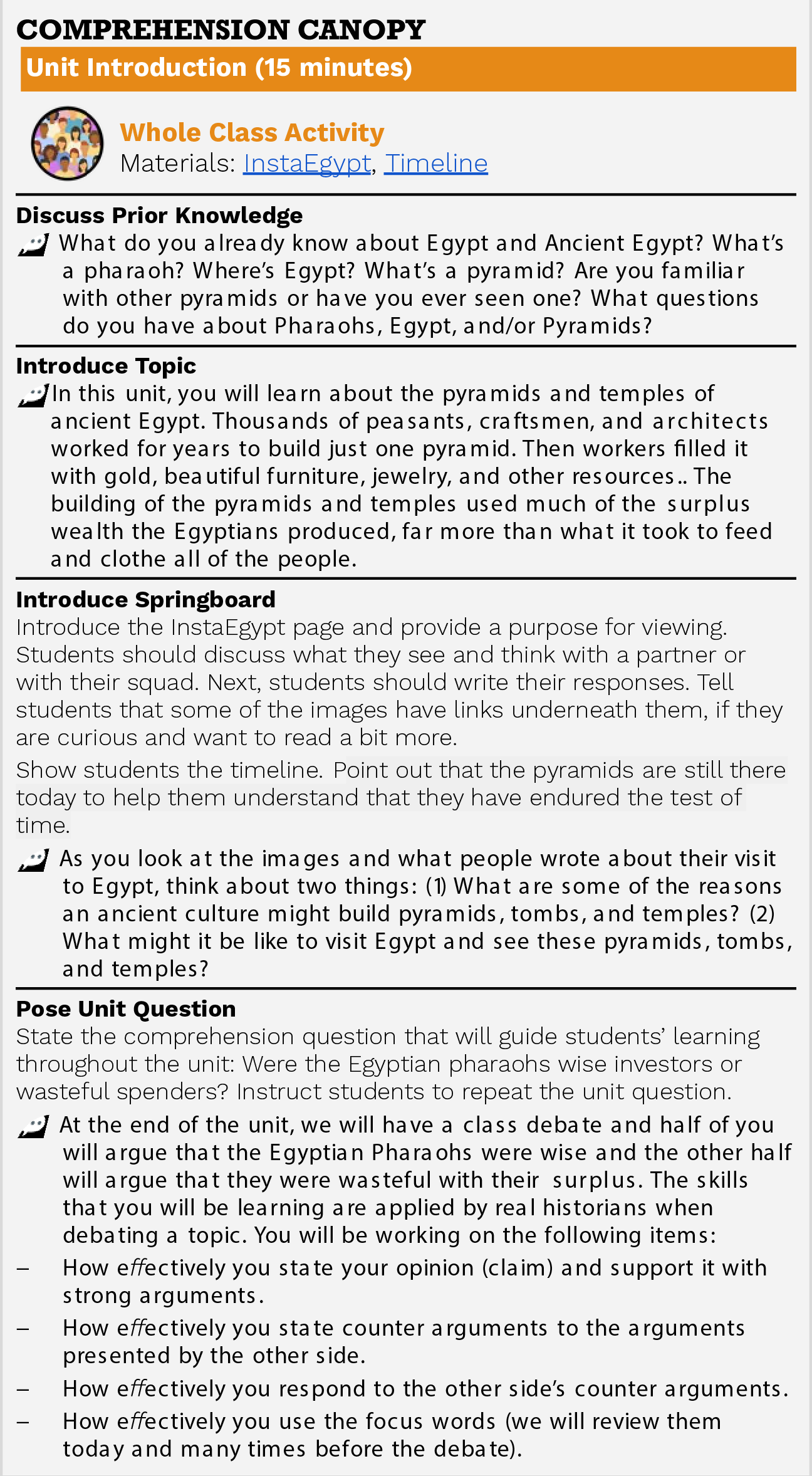
In Lesson 1, the teacher introduces the topic, then engages students in a springboard activity designed to introduce key vocabulary, make connections between ancient and modern-day Egypt, and then introduces the guiding question, “Were the Egyptian pharaohs wise investors or wasteful spenders?” The springboard activates and builds background knowledge essential to deepening knowledge in the unit.
Student Pages
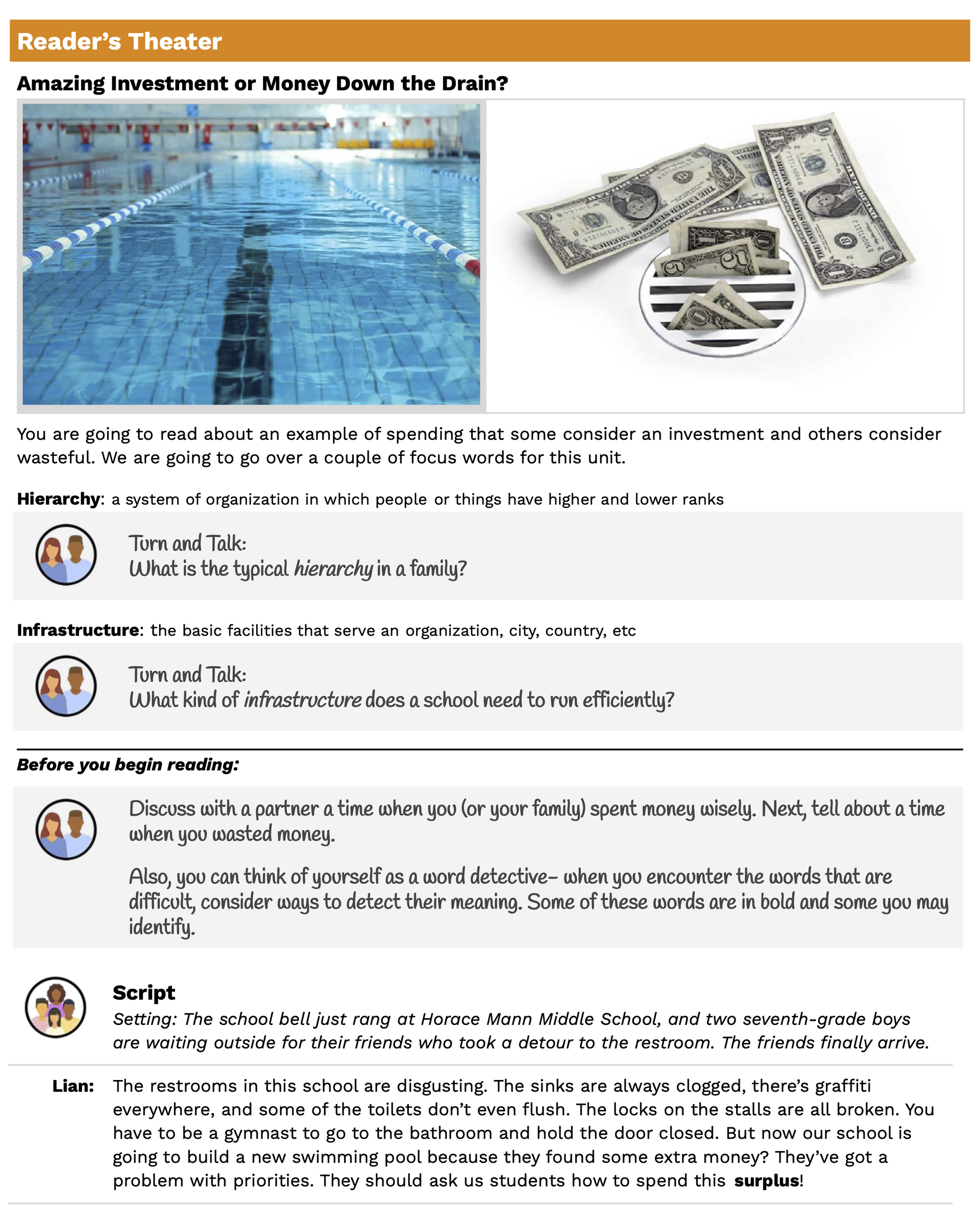
Readers Theater
In
Lesson 1, the lesson engages students in a Readers Theater script that parallels what happened in ancient Egypt with a modern-day example that students can relate to, a school deciding to invest in a building a swimming pool for athletics. Students in the scenario are debating whether it is a worthwhile investment. Before reading the script, the lesson introduces focus words that are essential to the unit content. These words appear in the Readers Theater and, later, in the lesson text.
Lesson 2 extends the Readers Theater with a peer discussion activity in which students identify different perspectives about the construction of the pool and develop arguments for and against it.
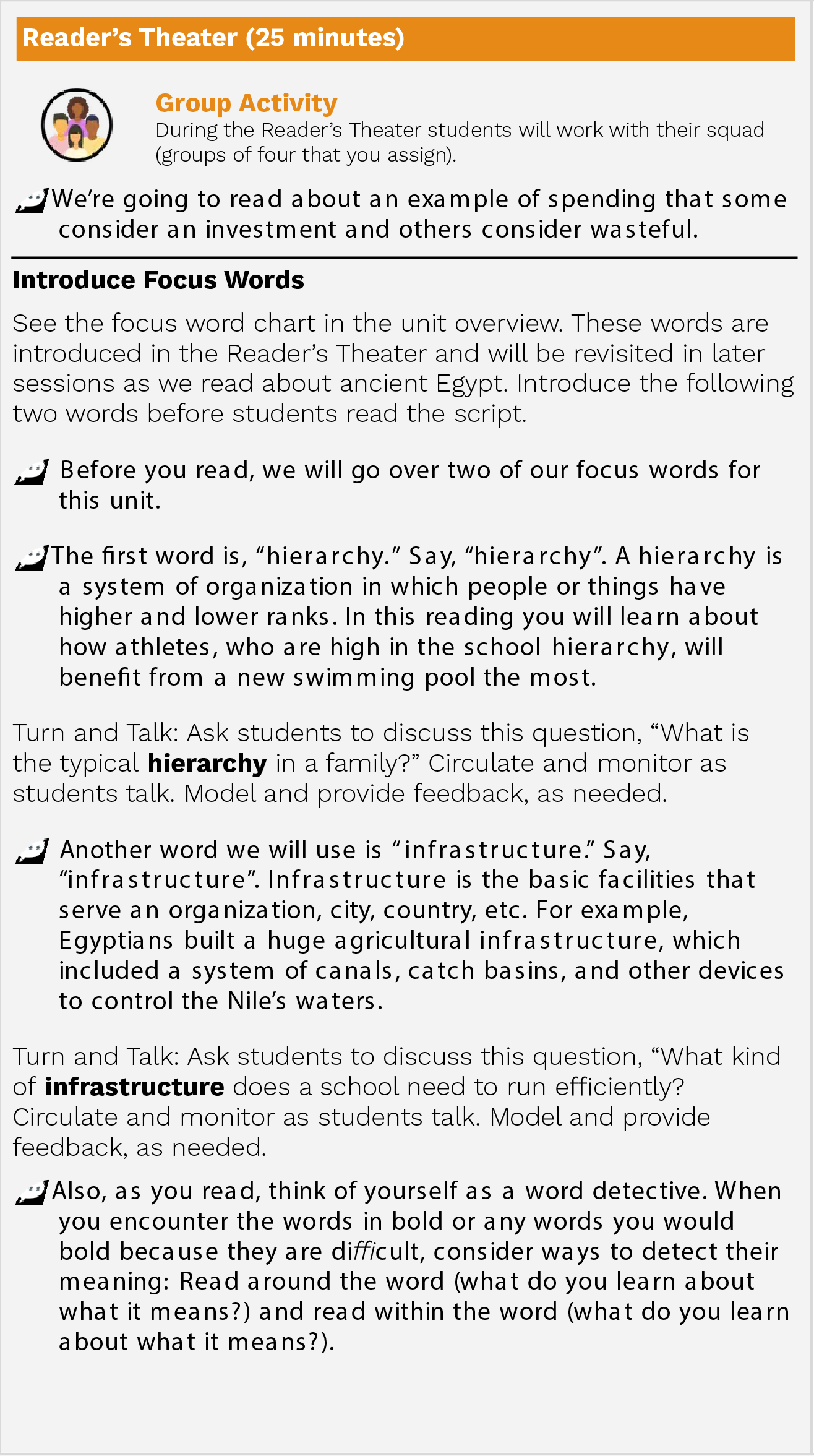
Student Pages
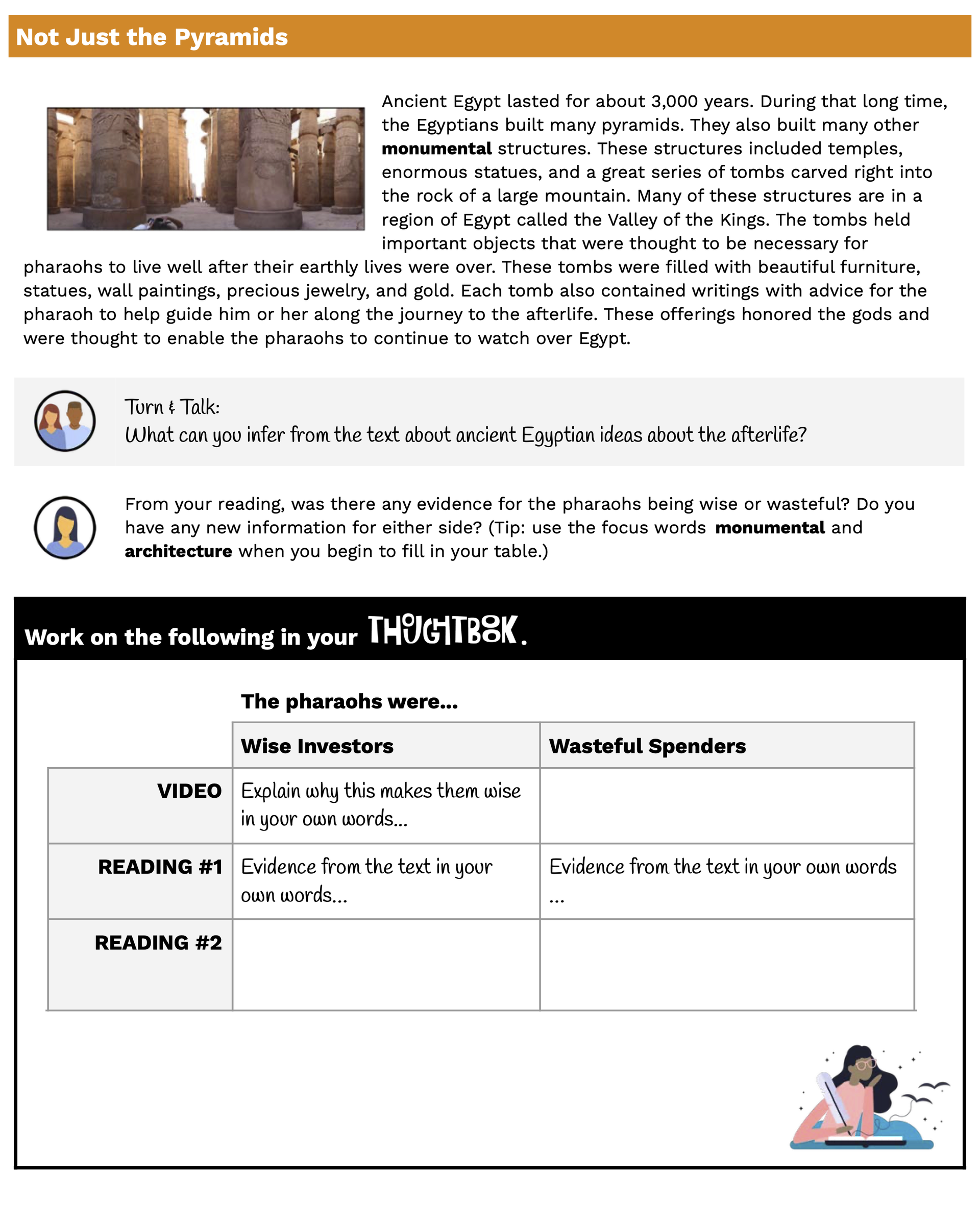
Moving on to Reading
In
Lesson 3, the focus moves to reading about ancient Egypt. The lesson begins with a review of focus words (monument and architecture), a short video about how the pyramids were built, and a Turn and Talk activity, all aimed at enhancing comprehension. The text reading is supported by peer discussion and an individual writing task (see Formative Assessment). Notice the highlighted focus words in the written text.
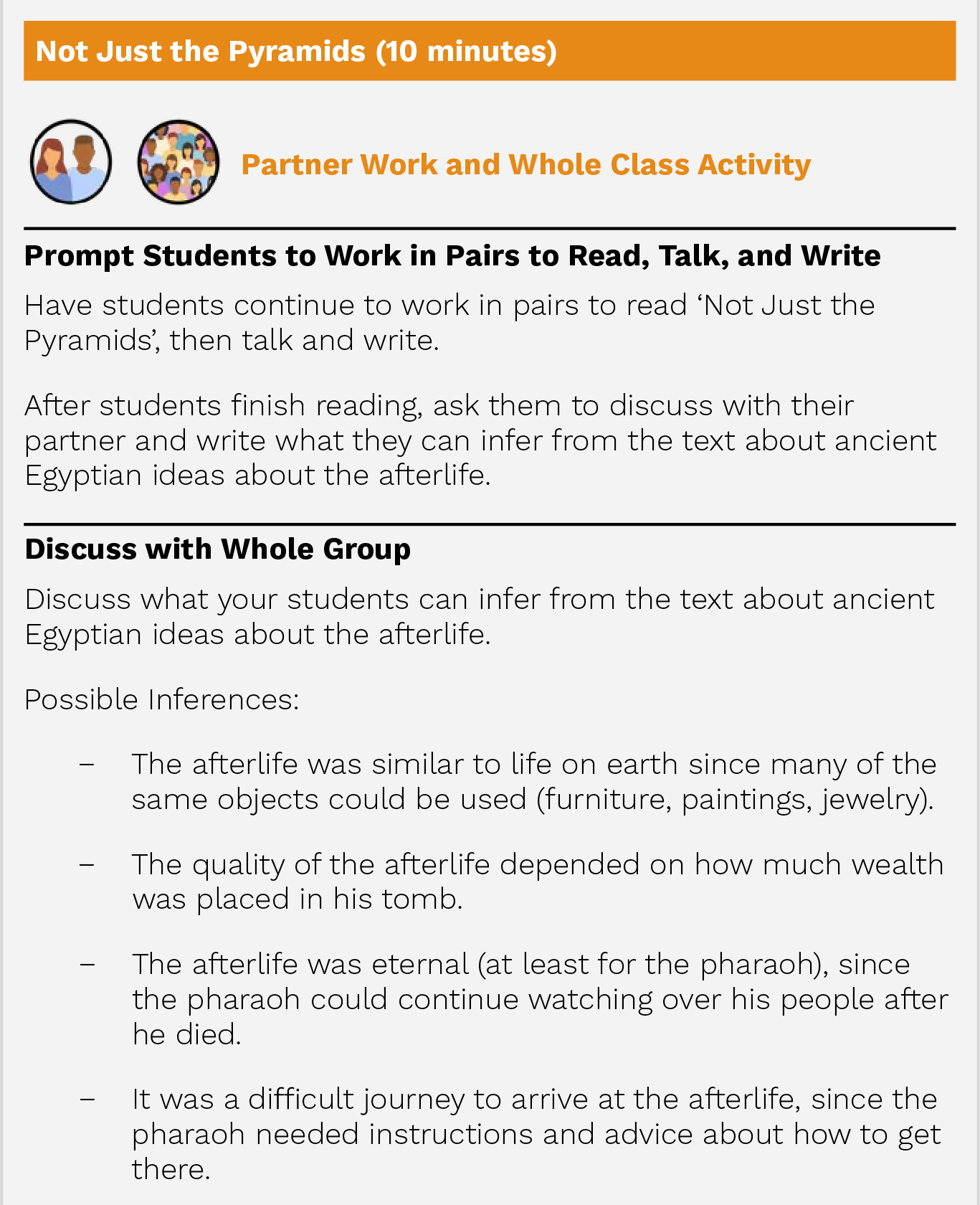
Student Pages
Reading and Discussion with Focus Words
In
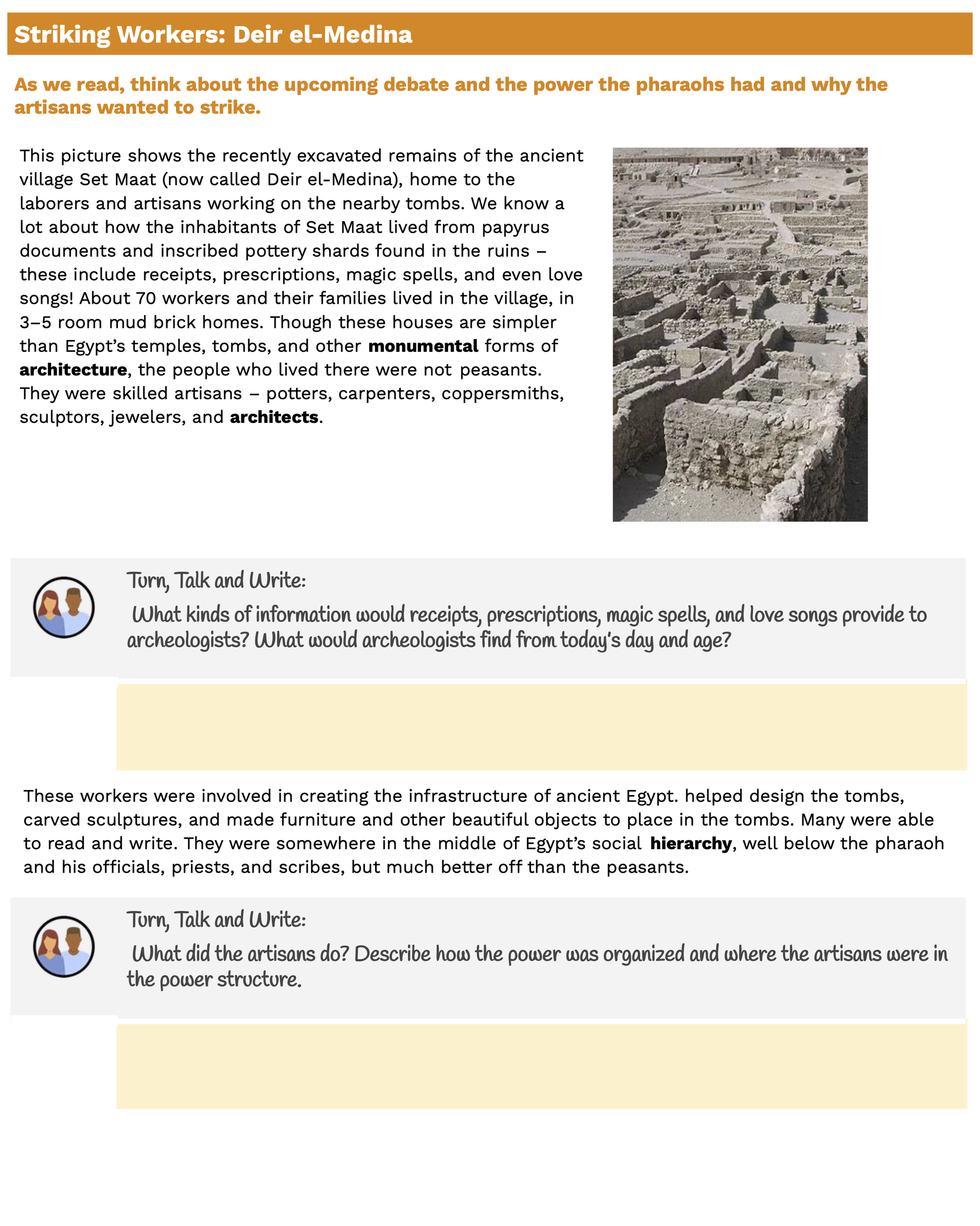
Lesson 4, text reading and oral discussion continue to build language and content knowledge. Focus words are highlighted, discussion prompts and writing tasks lead students to find text evidence to support or refute arguments.
Lesson 5
continues to build knowledge about the different types of roles people played in ancient Egyptian culture and how the building of the pyramids affected their lives. Students continue using disciplinary literacy skills to read, engage in oral discussions, find text evidence, and write about their learning.